
What Does Health Mean?
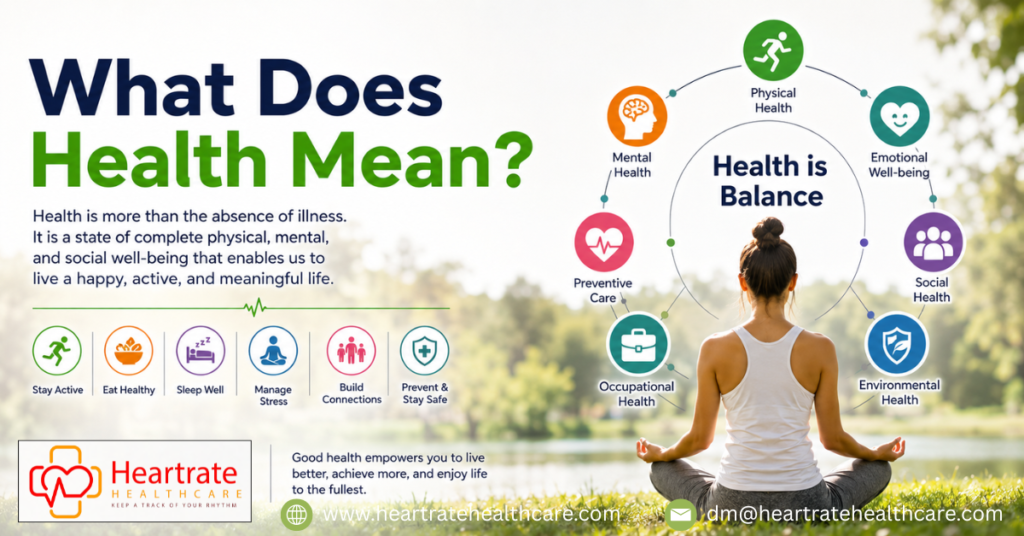
When people ask “What does health mean”, they often think about being free from illness. However, health is much more than simply not being sick. Health is a state of complete physical, mental, emotional, and social well-being that allows individuals to live productive, fulfilling, and balanced lives.
At Heartrate Healthcare (HRHC), we believe understanding health is the first step toward achieving a better quality of life. In today’s fast-paced world, maintaining health requires attention to multiple areas of life, including nutrition, exercise, sleep, mental wellness, and social relationships.
This comprehensive guide explains what does health mean, why it matters, the different dimensions of health, and practical ways to improve overall well-being.
Understanding What Does Health Mean
The question “what does health mean” has been discussed by healthcare professionals, researchers, and wellness experts for decades.
According to global healthcare standards, health is not merely the absence of disease. Instead, it represents a condition where the body and mind function efficiently while enabling individuals to adapt to life’s challenges.
When discussing what does health mean, it is important to recognize that health changes throughout life. A healthy child, adult, and senior citizen may all have different health needs and goals.
Health includes:
- Physical wellness
- Mental well-being
- Emotional stability
- Social connections
- Healthy lifestyle habits
- Preventive healthcare
- Environmental influences
Understanding what does health mean helps people make informed decisions that support long-term wellness and disease prevention.
Why Health Is Important
To fully understand what does health mean, we must first understand why health is essential.
Good health allows people to:
- Perform daily activities efficiently
- Maintain energy levels
- Improve concentration
- Reduce healthcare costs
- Strengthen immunity
- Increase longevity
- Enhance happiness
- Build meaningful relationships
- Achieve personal and professional goals
Without good health, even simple daily tasks can become challenging.
Health affects every aspect of life, from career success and financial stability to family relationships and emotional happiness.
The Physical Dimension of Health
One major component of what does health mean is physical health.
Physical health refers to the proper functioning of the body and its systems.
Characteristics of good physical health include:
- Healthy body weight
- Strong muscles and bones
- Efficient cardiovascular function
- Good energy levels
- Proper digestion
- Strong immune system
- Adequate sleep
Physical health can be improved through:
Regular Exercise
Exercise helps maintain:
- Heart health
- Muscle strength
- Flexibility
- Endurance
- Weight management
Experts generally recommend at least 150 minutes of moderate physical activity each week.
Balanced Nutrition
Healthy eating provides essential nutrients needed for:
- Growth
- Repair
- Energy production
- Disease prevention
A balanced diet typically includes:
- Fruits
- Vegetables
- Whole grains
- Lean proteins
- Healthy fats
- Adequate hydration
Quality Sleep
Sleep is often overlooked when discussing what does health mean, but it is a critical factor.
Benefits of quality sleep include:
- Better memory
- Improved mood
- Stronger immunity
- Faster recovery
- Reduced stress
Adults generally require 7–9 hours of sleep per night.
Mental Health and Overall Well-Being
Another essential part of understanding what does health mean is mental health.
Mental health involves:
- Emotional resilience
- Cognitive functioning
- Psychological well-being
- Stress management
Good mental health enables individuals to:
- Handle challenges
- Make decisions
- Build relationships
- Maintain productivity
Mental health influences physical health and vice versa.
Poor mental health may contribute to:
- Anxiety
- Depression
- Sleep disorders
- Chronic stress
- Heart disease risks
Maintaining mental wellness requires regular self-care, social support, and healthy coping strategies.
Emotional Health and Stability
When exploring what does health mean, emotional health cannot be ignored.
Emotional health refers to the ability to:
- Recognize emotions
- Express feelings appropriately
- Manage stress effectively
- Maintain emotional balance
Emotionally healthy individuals often:
- Adapt well to change
- Recover from setbacks
- Maintain positive relationships
- Develop self-confidence
Ways to support emotional health include:
- Journaling
- Meditation
- Mindfulness
- Counseling
- Stress management techniques
Social Health and Human Connections
Social health is another important aspect of what does health mean.
Humans are social beings who thrive through meaningful connections.
Healthy social relationships provide:
- Emotional support
- Motivation
- Belonging
- Improved mental health
- Reduced loneliness
Strong social health can be achieved by:
- Spending time with family
- Maintaining friendships
- Participating in community activities
- Communicating openly
- Supporting others
Research consistently shows that strong social connections contribute to longer and healthier lives.
Environmental Health
Many people do not realize environmental factors influence what does health mean.
Environmental health focuses on how surroundings impact wellness.
Important environmental factors include:
- Clean air
- Safe drinking water
- Healthy workplaces
- Proper sanitation
- Reduced pollution
- Safe housing
A healthy environment reduces the risk of disease and promotes better physical and mental well-being.
Occupational Health
Occupational health refers to health and safety in the workplace.
A healthy work environment supports:
- Productivity
- Job satisfaction
- Physical safety
- Mental well-being
Occupational health practices include:
- Ergonomic workstations
- Stress management programs
- Workplace safety measures
- Regular breaks
- Health screenings
Understanding what does health mean includes recognizing the impact of work conditions on overall wellness.
The Relationship Between Health and Lifestyle
Lifestyle choices significantly affect health outcomes.
When asking what does health mean, it is essential to examine daily habits.
Healthy lifestyle choices include:
Eating Nutritious Foods
Nutrient-rich foods support:
- Heart health
- Brain function
- Energy production
- Disease prevention
Staying Active
Physical activity improves:
- Circulation
- Metabolism
- Mental health
- Strength
Avoiding Harmful Habits
Limiting or avoiding:
- Tobacco use
- Excessive alcohol consumption
- Drug abuse
helps protect long-term health.
Managing Stress
Chronic stress can negatively affect:
- Blood pressure
- Sleep quality
- Immune function
- Mental health
Stress management techniques include:
- Exercise
- Deep breathing
- Meditation
- Time management
Preventive Healthcare and Health Maintenance
A key component of what does health mean is prevention.
Preventive healthcare focuses on reducing the risk of illness before it develops.
Examples include:
- Routine checkups
- Vaccinations
- Health screenings
- Blood pressure monitoring
- Cholesterol testing
- Cancer screenings
Preventive care allows healthcare providers to identify potential issues early and improve treatment outcomes.
Common Factors That Affect Health
Several factors influence health throughout life.
These include:
Genetics
Inherited traits may affect susceptibility to certain conditions.
Lifestyle Choices
Diet, exercise, sleep, and stress management significantly impact wellness.
Environment
Living and working conditions influence overall health.
Healthcare Access
Access to quality medical services improves health outcomes.
Education
Health literacy helps individuals make informed decisions.
Understanding these factors provides a clearer picture of what does health mean in everyday life.
Health Across Different Life Stages
Health needs evolve over time.
Childhood
Focus areas include:
- Growth and development
- Nutrition
- Vaccinations
- Physical activity
Adolescence
Important considerations include:
- Mental health
- Healthy habits
- Physical development
- Social well-being
Adulthood
Adults often focus on:
- Career balance
- Chronic disease prevention
- Fitness
- Stress management
Older Adults
Healthy aging emphasizes:
- Mobility
- Cognitive health
- Preventive care
- Social engagement
At every stage, understanding what does health mean helps individuals make better lifestyle choices.
Signs of Good Health
Indicators of good health include:
- Consistent energy levels
- Healthy appetite
- Quality sleep
- Positive mood
- Strong immunity
- Healthy body weight
- Mental clarity
- Physical fitness
These signs suggest that the body and mind are functioning effectively.
Warning Signs of Poor Health
Potential warning signs include:
- Chronic fatigue
- Frequent illness
- Persistent stress
- Sleep problems
- Weight fluctuations
- Mood disorders
- Difficulty concentrating
Recognizing these symptoms early can help individuals seek appropriate care.
The Role of Technology in Modern Healthcare
Technology has transformed healthcare in many ways.
Examples include:
- Telemedicine
- Electronic health records
- Health monitoring apps
- Wearable fitness devices
- Remote patient monitoring
These innovations help individuals better understand their health status and make informed decisions.
Building a Healthier Future
If you’re still wondering what does health mean, the answer extends beyond hospitals and medical treatments.
Health is a lifelong journey involving:
- Physical wellness
- Mental strength
- Emotional balance
- Social connections
- Healthy habits
- Preventive care
Small daily improvements often lead to significant long-term benefits.
Examples include:
- Walking regularly
- Eating more vegetables
- Drinking enough water
- Sleeping adequately
- Managing stress
- Staying connected with loved ones
These simple actions can greatly improve overall well-being.
How Heartrate Healthcare (HRHC) Supports Better Health
At Heartrate Healthcare (HRHC), we understand that health involves more than treating illness.
Our mission is to support individuals and organizations through healthcare solutions, wellness education, healthcare support services, and health-focused resources.
We encourage people to:
- Prioritize preventive care
- Maintain healthy lifestyles
- Stay informed about wellness
- Seek professional guidance when needed
By understanding what does health mean, individuals can take proactive steps toward healthier and more fulfilling lives.
Conclusion
So, what does health mean?
Health means achieving a balanced state of physical, mental, emotional, social, and environmental well-being. It is not simply the absence of disease but the ability to live actively, adapt to challenges, and enjoy a high quality of life.
Good health requires consistent effort through healthy eating, regular exercise, adequate sleep, stress management, preventive healthcare, and positive social relationships.
Whether you are focusing on fitness, mental wellness, disease prevention, or overall quality of life, understanding what does health mean is the foundation for making smarter health decisions.
At Heartrate Healthcare (HRHC), we believe that informed individuals create healthier communities, stronger families, and brighter futures.