
Health Heart Beat Per Minute

Health Heart Beat Per Minute | Complete Guide and Chart

Health Heart Beat Per Minute: Complete Guide to Monitoring & Improving Heart Health

Understanding your health heart beat per minute is essential for maintaining overall wellness and preventing serious cardiovascular conditions. Your heartbeat is more than just a rhythmβ€”it is a direct reflection of your body’s internal balance, physical fitness, and emotional state.

A healthy heart beat per minute ensures that oxygen-rich blood is efficiently delivered to every part of your body. When this rhythm becomes irregular, too fast, or too slow, it can indicate underlying health concerns that require attention.

At Heartrate Healthcare (HRHC), we emphasize the importance of monitoring your health heart beat per minute regularly to maintain long-term cardiovascular health and improve quality of life.

What is Health Heart Beat Per Minute (Definition)

Health heart beat per minute refers to the number of times your heart beats within one minute while maintaining a healthy and balanced rhythm.

It is commonly measured in BPM (beats per minute) and varies based on several factors such as age, activity level, emotional condition, and overall health.

For example:

  • A calm and relaxed state results in a stable heart beat per minute
  • Physical activity increases your heart’s demand for oxygen, raising BPM

Maintaining a normal health heart beat per minute is crucial for optimal heart performance.

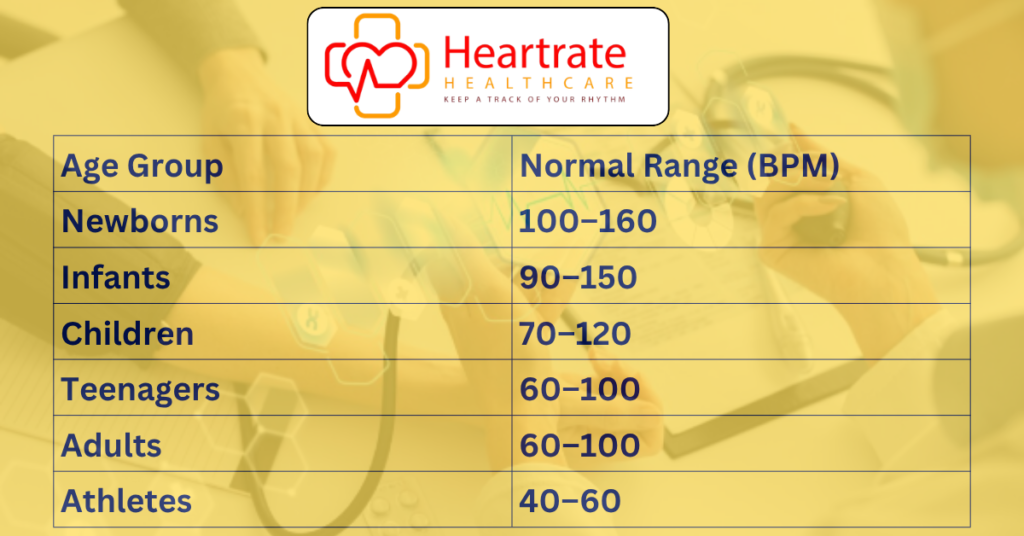
Normal Health Heart Beat Per Minute by Age (Chart)

Your health heart beat per minute changes throughout different stages of life.

Normal Range (BPM)

πŸ‘‰ For most adults in the USA, a healthy heart beat per minute falls between 60–100 BPM.

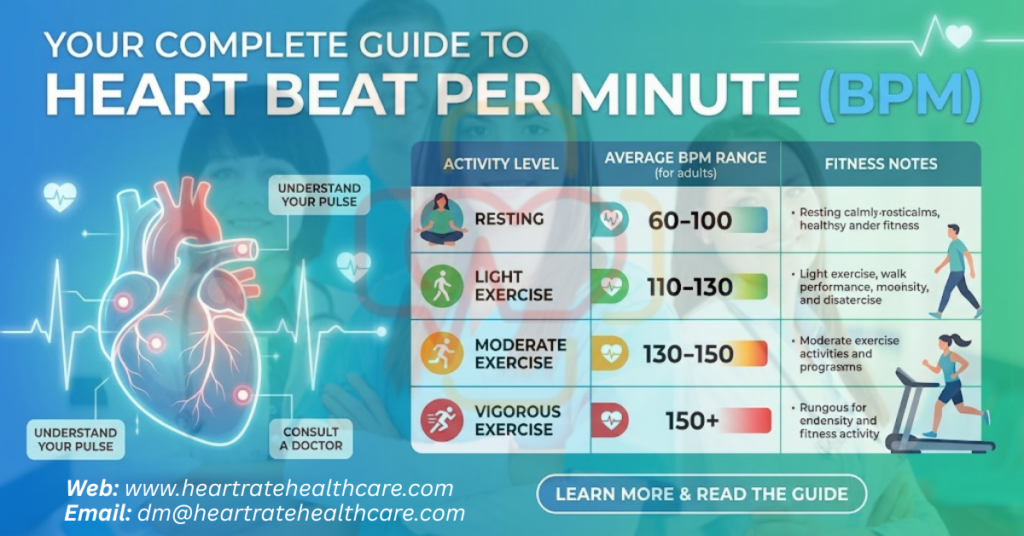
Resting vs Active Heart Beat Per Minute

Resting Heart Beat Per Minute

This is your heart rate when you are completely relaxed.

  • Ideal range: 60–80 BPM
  • Indicates heart efficiency
  • Lower values often mean better fitness

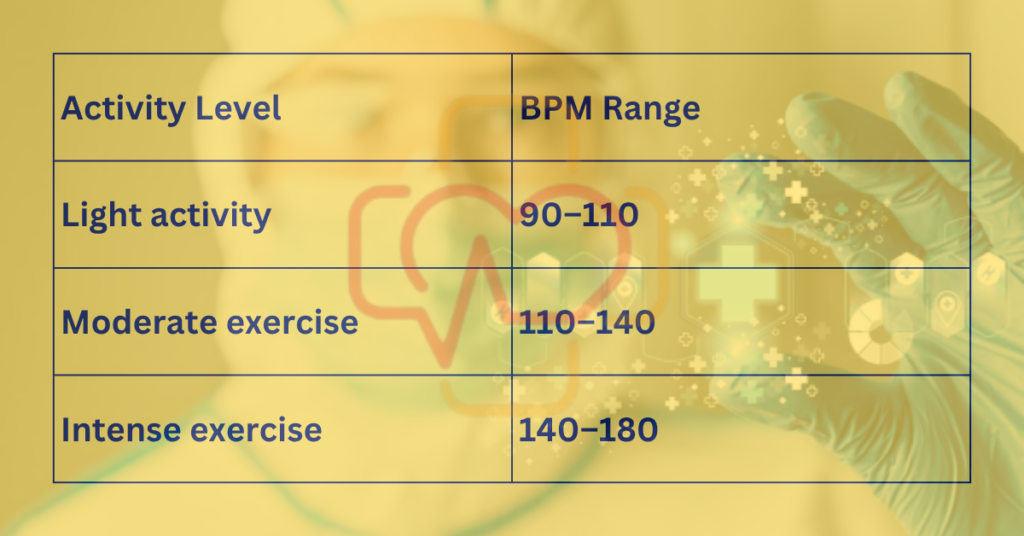
Active Heart Beat Per Minute

During physical activity, your health heart beat per minute increases to meet the body’s oxygen demand.

Active Heart Beat Per Minute

 Monitoring both helps maintain a balanced health heart beat per minute.

Why Monitoring Heart Beat Per Minute is Important

Tracking your health heart beat per minute provides valuable health insights:

  • Detect early signs of heart disease
  • Monitor stress and anxiety levels
  • Improve fitness performance
  • Maintain overall cardiovascular health

Medical authorities like Cleveland Clinic also highlight the importance of regular heart rate monitoring.

Causes of High Heart Beat Per Minute

A high health heart beat per minute (above 100 BPM at rest) can be caused by:

  • Stress and anxiety
  • Dehydration
  • Fever or illness
  • Excess caffeine
  • Smoking
  • Poor physical fitness

Symptoms of High BPM

  • Rapid heartbeat
  • Shortness of breath
  • Dizziness
  • Chest discomfort

Persistent high heart beat per minute can strain your heart.

Causes of Low Heart Beat Per Minute

A low Health Heart Beat per minute (below 60 BPM) may occur due to:

  • High fitness levels
  • Heart conduction issues
  • Thyroid imbalance
  • Medication side effects

Symptoms of Low BPM

  • Fatigue
  • Weakness
  • Fainting
  • Confusion

Maintaining a balanced heart beat per minute is essential for proper body function.

Symptoms & Risks of Abnormal Heart Beat Per Minute

⚠️ Common Symptoms

  • Irregular heartbeat
  • Breathlessness
  • Chest pain
  • Sudden fatigue

🚨 Health Risks

  • Heart disease
  • Stroke
  • Cardiac arrest
  • Reduced oxygen supply

An unstable health heart beat per minute can lead to serious complications if ignored.

How to Measure Health Heart Beat Per Minute (Step-by-Step)

βœ… Manual Method

  1. Sit calmly for a few minutes
  2. Place fingers on your wrist or neck
  3. Count beats for 15 seconds
  4. Multiply by 4

βœ… Digital Devices

  • Smartwatches
  • Fitness trackers
  • Medical monitors

These tools help track your health heart beat per minute accurately.

Best Ways to Improve Health Heart Beat Per Minute

πŸƒβ€β™‚οΈ 1. Exercise Regularly

Improves heart strength and stabilizes BPM.

πŸ₯— 2. Eat a Balanced Diet

Supports cardiovascular health.

πŸ’§ 3. Stay Hydrated

Prevents unnecessary increase in heart rate.

πŸ§˜β€β™‚οΈ 4. Manage Stress

Helps maintain a stable heart beat per minute.

🚭 5. Avoid Smoking

Reduces risk of heart complications.

😴 6. Get Quality Sleep

Essential for maintaining healthy BPM levels.

When to See a Doctor

Consult a healthcare professional if:

  • Your heart beat per minute is consistently high or low
  • You experience chest pain or dizziness
  • Your heartbeat feels irregular

Early diagnosis helps maintain a healthy health heart beat per minute.

Frequently Asked Questions (FAQs)

❓ What is a normal health heart beat per minute?

A normal range is 60–100 BPM for adults.

❓ What is a good resting heart beat per minute?

Between 60–80 BPM is considered healthy.

❓ Can stress increase heart beat per minute?

Yes, stress can significantly raise BPM.

❓ Is a lower heart beat per minute better?

Generally yes, if you are healthy and active.

❓ How can I lower my heart beat per minute quickly?

Relax, hydrate, and practice deep breathing.

❓ Does age affect heart beat per minute?

Yes, it varies across different age groups.

❓ Can dehydration affect BPM?

Yes, it can increase heart rate.

❓ Is 120 BPM dangerous?

It may be concerning if persistent at rest.

❓ Can exercise improve heart rate?

Yes, regular exercise improves heart efficiency.

❓ When should I worry about heart rate?

If it is consistently abnormal or causes symptoms.

Conclusion

Your health heart beat per minute is a powerful indicator of your overall well-being. By understanding and maintaining a normal range, you can significantly reduce the risk of cardiovascular diseases and improve your quality of life.

At Heartrate Healthcare (HRHC), we encourage regular monitoring, healthy lifestyle choices, and early medical consultation to ensure optimal heart health.

Comments

No comments yet. Why don’t you start the discussion?

Leave a Reply

Your email address will not be published. Required fields are marked *