
Heart Heart Rate refers to the number of times your heart beats per minute (BPM). It’s a vital indicator of your cardiovascular health, and knowing how to monitor and maintain a healthy Heart Heart Rate is crucial for long-term well-being. This guide will provide you with everything you need to know to ensure your Heart Heart Rate stays within a healthy range.
At Heartrate Healthcare (HRHC), we focus on educating individuals about the importance of Heart Heart Rate, how to monitor it effectively, and ways to improve it for better overall health.
What is Heart Heart Rate?
Heart Heart Rate is simply the number of heartbeats per minute. When your body is at rest, your resting heart rate (RHR) is lower, and it increases as you engage in physical activity. A higher or lower than normal Heart Heart Rate can indicate a variety of conditions, ranging from stress or dehydration to more severe heart issues.
Why is Heart Heart Rate Important?
- Monitors heart health: Consistent monitoring of Heart Heart Rate can detect early signs of heart disease or arrhythmias.
- Helps gauge fitness: A lower Heart Heart Rate often indicates better cardiovascular fitness.
- Regulates body functions: A balanced Heart Heart Rate supports optimal blood flow and oxygen delivery.
Normal Heart Heart Rate: What is Healthy?
Your Heart Heart Rate varies depending on your age, fitness level, and activity level. Below is a table outlining Heart Heart Rate ranges based on age and fitness.
| Age Group | Normal Heart Heart Rate (BPM) |
|---|---|
| Newborns (0-1 months) | 100-160 |
| Infants (1-12 months) | 90-150 |
| Children (1-10 years) | 70-120 |
| Teenagers (11-17 years) | 60-100 |
| Adults (18+ years) | 60-100 |
| Athletes | 40-60 |
Resting Heart Rate (RHR) plays a major role in determining Heart Heart Rate health. Generally, a lower RHR indicates better health, especially if the individual is physically fit.
Resting vs Active Heart Heart Rate
Resting Heart Heart Rate
The resting heart rate is the number of beats per minute while you’re not engaging in any physical activity. A lower resting Heart Rate is usually a sign of better cardiovascular health and fitness.
- Normal RHR for adults: 60–100 BPM
- Athletes: 40–60 BPM
Active Heart Heart Rate
Your Heart Heart Rate increases when your body needs more oxygen, such as during exercise. The active heart rate gives an indication of how efficiently your heart is working during physical exertion.
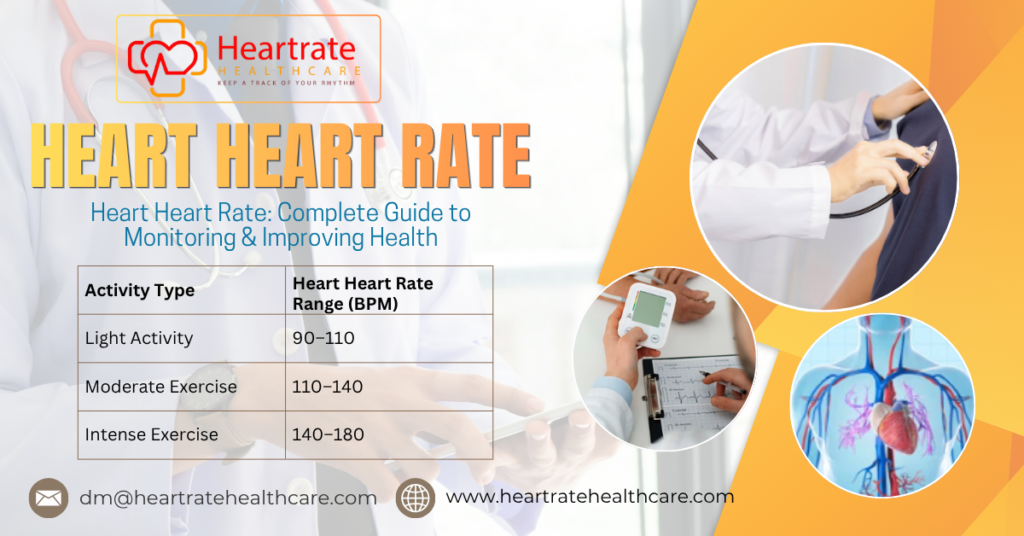
| Activity Type | Heart Heart Rate Range (BPM) |
|---|---|
| Light Activity | 90–110 |
| Moderate Exercise | 110–140 |
| Intense Exercise | 140–180 |
Causes of High Heart Heart Rate (Tachycardia)
A high heart heart rate (above 100 BPM at rest) can be caused by several factors, including:
- Stress and emotional anxiety
- Fever or infection
- Dehydration
- Excess caffeine or stimulant use
- Heart disease or arrhythmias
Symptoms of Tachycardia:
- Rapid heartbeat
- Dizziness or lightheadedness
- Shortness of breath
- Chest pain
If you experience these symptoms, it’s important to consult with a healthcare provider.
Causes of Low Heart Heart Rate (Bradycardia)
A low heart heart rate (below 60 BPM) is known as bradycardia. It can be caused by:
- Physical fitness (athletes may have a lower heart rate)
- Electrical conduction issues in the heart
- Thyroid problems or hormone imbalances
- Medications (e.g., beta-blockers)
Symptoms of Bradycardia:
- Fatigue or weakness
- Dizziness or fainting
- Shortness of breath
- Confusion
How to Measure Heart Heart Rate: Step-by-Step Guide
Measuring your Heart Heart Rate is simple and can be done manually or with digital devices. Here’s how:
Manual Method (Using Fingers):
- Place your index and middle fingers on your wrist (or neck)
- Count the number of beats you feel for 15 seconds
- Multiply the result by 4 to get your BPM
Using Devices:
- Smartwatches or fitness trackers can continuously monitor your Heart Heart Rate and provide real-time data during physical activity.
- Heart rate monitors are also available for more precise measurements.
Best Ways to Improve Heart Heart Rate
Here are some proven ways to improve your Heart Heart Rate and overall cardiovascular health:
1. Exercise Regularly
Engage in regular cardiovascular exercise like jogging, cycling, or swimming to strengthen the heart and improve Heart Heart Rate efficiency.
2. Maintain a Healthy Diet
A heart-healthy diet rich in fruits, vegetables, lean proteins, and whole grains can help manage normal Heart Heart Rate levels.
3. Stay Hydrated
Dehydration can lead to an increased Heart Heart Rate, so it’s essential to drink plenty of water throughout the day.
4. Manage Stress
Practices like yoga, meditation, and deep breathing exercises can help reduce stress and lower your Heart Heart Rate over time.
5. Avoid Harmful Habits
- Limit caffeine and alcohol intake
- Quit smoking
6. Get Enough Sleep
Adequate sleep is crucial for heart health and helps maintain a healthy resting Heart Heart Rate.
When to See a Doctor
If you experience consistent abnormal Heart Heart Rate patterns, such as a rapid or very slow heartbeat, it’s essential to seek medical advice. Other warning signs include:
- Dizziness or fainting
- Chest pain
- Shortness of breath
- Swelling in the legs or feet
10 Questions and Answers about Heart Heart Rate
1. What is a normal resting Heart Heart Rate?
A normal resting Heart Heart Rate for adults is 60-100 BPM, and for athletes, it can be lower.
2. What causes a high Heart Heart Rate?
Stress, fever, dehydration, and excessive caffeine intake can cause an elevated Heart Heart Rate.
3. How can I lower my Heart Heart Rate?
Regular exercise, stress management, and hydration can help lower your Heart Heart Rate.
4. Why is my Heart Heart Rate high when I’m resting?
Resting Heart Heart Rate above 100 BPM may indicate stress, dehydration, or an underlying health issue.
5. How do I check my Heart Heart Rate?
You can check your Heart Heart Rate manually by counting beats at your wrist or neck, or using a fitness device.
6. Can anxiety increase Heart Heart Rate?
Yes, emotional stress and anxiety can significantly raise your Heart Heart Rate.
7. What is bradycardia?
Bradycardia is a condition where the Heart Heart Rate is lower than 60 BPM, often caused by fitness or heart conditions.
8. Is a low Heart Heart Rate dangerous?
A low Heart Heart Rate can be dangerous if it leads to symptoms like dizziness, fainting, or extreme fatigue.
9. When should I see a doctor for Heart Heart Rate issues?
If your Heart Heart Rate is consistently high or low, or if you experience symptoms like chest pain or shortness of breath, seek medical help.
10. Can exercise help regulate Heart Heart Rate?
Yes, regular cardiovascular exercise helps regulate both resting Heart Heart Rate and active Heart Heart Rate.