
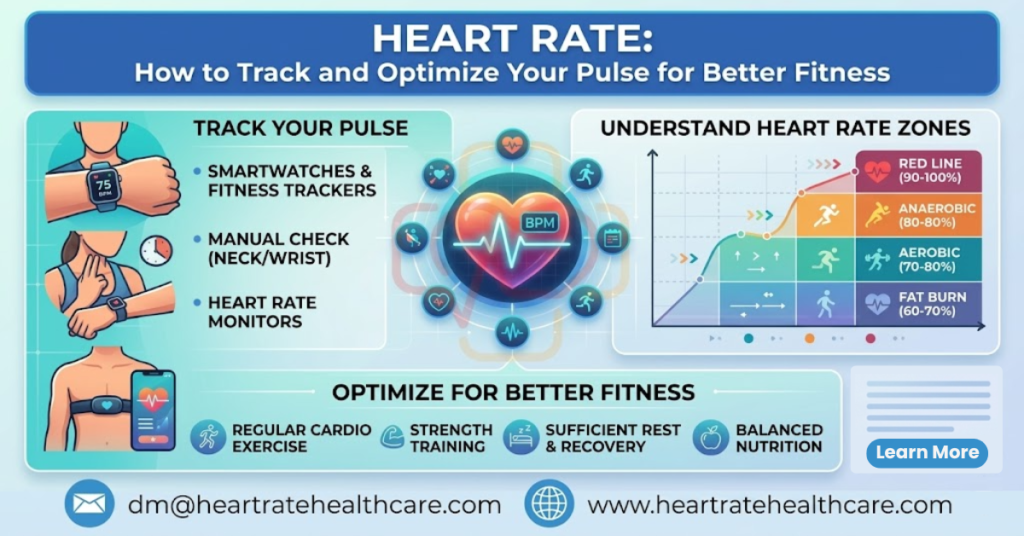

Your heart rate is an essential measure of your cardiovascular fitness. Whether you are exercising or at rest, tracking your heart rate rate is vital for optimizing your workouts and maintaining a healthy lifestyle. By understanding the different types of heart rates — resting heart rate, active heart rate, and target heart rate zones — you can improve your heart health, maximize workout efficiency, and track progress towards fitness goals.
At Heartrate Healthcare (HRHC), we focus on providing expert insights and tools to help individuals maintain a balanced and healthy heart rate. In this guide, we will explore everything you need to know about heart rate and how to manage it for better fitness and overall health.
What is Heart Rate Rate?
Heart rate rate refers to the number of times your heart beats per minute (BPM). It is an essential metric for measuring your cardiovascular health. While heart rate naturally fluctuates depending on activity levels, age, fitness, and overall health, understanding how to measure, track, and optimize your heart rate is key to achieving better fitness results.
Types of Heart Rate
- Resting Heart Rate: The number of heartbeats per minute when you are at complete rest. A lower resting heart rate usually indicates better cardiovascular health and higher fitness levels.
- Active Heart Rate: The heart rate when you are engaged in physical activity, such as exercising. Monitoring this helps you understand your body’s response to various intensities of exercise.
- Target Heart Rate Zone: This is the heart rate range that helps you exercise at a level that improves cardiovascular fitness without overexertion.
Why is Tracking Your Heart Rate Important?
1. Monitor Fitness Progress
Tracking your heart rate rate helps you measure the effectiveness of your workout. If you regularly exercise, your heart rate will naturally lower over time as your heart becomes more efficient, showing that your fitness is improving.
2. Prevent Overtraining
Exercising within your target heart rate zone prevents overexertion. If your heart rate is too high, it might signal that you’re pushing your body too hard, which can lead to fatigue, injury, or burnout.
3. Optimize Workouts
By tracking your heart rate, you can optimize your workouts, ensuring that you’re working out at the correct intensity for maximum benefits, whether you’re aiming for fat loss, endurance building, or strength training.
Normal Heart Rate by Age and Fitness Level
Normal Heart Rate Ranges for Different Age Groups
| Age Group | Normal Resting Heart Rate (BPM) |
|---|---|
| Infants (0-1 year) | 100-160 |
| Children (1-10 years) | 70-120 |
| Teenagers (11-19 years) | 60-100 |
| Adults (20-60 years) | 60-100 |
| Older Adults (60+) | 50-100 |
Resting Heart Rate and Fitness Levels
- Untrained Individuals: 70-100 BPM
- Athletes or Fit Individuals: 40-60 BPM
A resting heart rate that’s lower than average generally means better cardiovascular fitness. However, it’s important to note that extreme low heart rates could indicate a medical condition like bradycardia, where the heart beats too slowly.
How to Measure Your Heart Rate Rate
Measuring your heart rate rate can be done through various methods, including manual techniques and wearable fitness trackers.
Manual Method (Using Your Pulse)
- Find Your Pulse: Use your fingers to locate your pulse either at the wrist (radial artery) or neck (carotid artery).
- Count the Beats: Use a stopwatch or timer to count the number of beats in 15 seconds.
- Calculate the BPM: Multiply the count by 4 to get your heart rate in beats per minute.
Using Wearable Technology
- Fitness Trackers: Devices like Fitbit, Apple Watch, and Garmin provide continuous heart rate tracking during physical activity and rest.
- Heart Rate Monitors: These devices, worn on the chest or wrist, offer more precise readings than fitness trackers.
How to Optimize Your Heart Rate Rate for Better Fitness
To get the most out of your workouts and maintain optimal cardiovascular health, it’s crucial to optimize your heart rate rate. Here are a few tips to help you achieve this:
1. Regular Cardiovascular Exercise
Engage in consistent cardio workouts, such as running, cycling, swimming, or brisk walking, to strengthen your heart. Over time, your resting heart rate will naturally drop as your heart becomes more efficient.
2. Use Target Heart Rate Zones
Work out in your target heart rate zone to maximize the benefits of exercise. Typically, this range is 50-85% of your maximum heart rate, which is calculated as 220 minus your age.
3. Improve Sleep Quality
Quality sleep is essential for heart health. Poor sleep can lead to higher resting heart rates and increased risk of cardiovascular issues.
4. Manage Stress Levels
Chronic stress can cause a spike in heart rate, so it’s important to incorporate stress management techniques such as yoga, deep breathing, and meditation.
5. Maintain a Healthy Diet
A balanced diet rich in fruits, vegetables, lean proteins, and whole grains helps support heart health. Avoid excessive salt, sugar, and processed foods.
Signs of Abnormal Heart Rate and When to Seek Medical Advice
An abnormal heart rate can be a sign of an underlying medical condition. Here’s what to look out for:
Signs of a High Heart Rate (Tachycardia)
- Resting heart rate consistently over 100 BPM
- Dizziness or lightheadedness
- Shortness of breath
- Chest pain
Signs of a Low Heart Rate (Bradycardia)
- Resting heart rate consistently under 60 BPM
- Fatigue or weakness
- Dizziness or fainting spells
If you notice these symptoms, it’s important to consult a healthcare provider to evaluate your condition.
10 Questions and Answers About Heart Rate Rate
- Q: What is the best way to lower my heart rate?
A: Engage in regular cardiovascular exercise, reduce stress, stay hydrated, and avoid caffeine. - Q: Why is my heart rate high during exercise?
A: Your heart rate increases to provide oxygen to your muscles during physical activity. It’s normal unless it’s excessively high for your fitness level. - Q: What is a healthy resting heart rate for athletes?
A: Athletes often have a resting heart rate between 40-60 BPM, which is considered healthy and indicates a well-conditioned heart. - Q: Can stress affect my heart rate?
A: Yes, stress can cause your heart rate to spike. Practicing stress management techniques can help control it. - Q: How do I find my target heart rate?
A: To find your target heart rate, subtract your age from 220, then aim for 50-85% of that value during exercise. - Q: Can a low heart rate be dangerous?
A: If your heart rate is too low (under 60 BPM) and you’re not an athlete, it may signal an underlying health condition, such as bradycardia. - Q: What is a normal heart rate for someone over 60?
A: For adults over 60, a resting heart rate between 50-100 BPM is considered normal. - Q: How can I monitor my heart rate during exercise?
A: Use a heart rate monitor, fitness tracker, or manually check your pulse to monitor your heart rate while exercising. - Q: Is it okay to exercise with a high heart rate?
A: It’s fine to have an elevated heart rate during exercise, but if it stays too high after exercise or feels uncomfortable, stop and consult a doctor. - Q: Can my diet affect my heart rate?
A: Yes, a diet high in salt, sugar, and unhealthy fats can increase your heart rate. A heart-healthy diet can help stabilize it.