
When we ask the question “What Does Health Mean”, the answer is far deeper than a simple definition. Health is not a fixed condition; it is a dynamic state that evolves with time, environment, lifestyle, and personal experiences.
In today’s world, health is understood as a complete balance between physical strength, mental stability, and social well-being. It is not just about avoiding illness, but about living a life that is active, fulfilling, and meaningful.
This modern understanding highlights that health is both an individual responsibility and a global priority.
Understanding Health Beyond Disease
Traditionally, many people believed that being healthy simply meant not being sick. However, this narrow view has changed significantly.
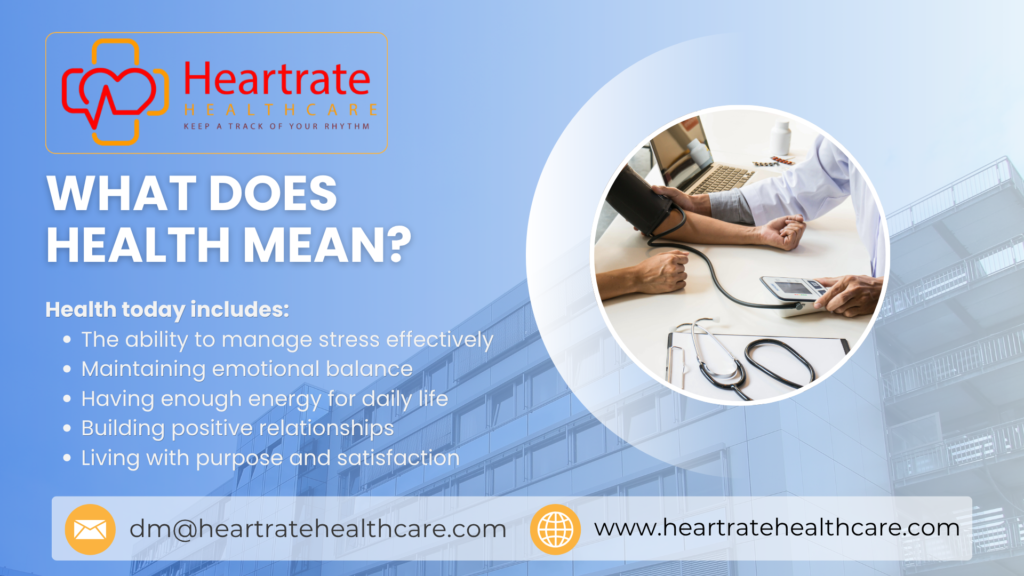
Health today includes:
- The ability to manage stress effectively
- Maintaining emotional balance
- Having enough energy for daily life
- Building positive relationships
- Living with purpose and satisfaction
This means that a person may not have a diagnosed illness, yet still not be truly healthy if they lack mental peace or social stability.
Health as a Universal Human Right
Health is not a privilege—it is a fundamental human necessity. Every individual deserves access to conditions that support good health, regardless of their:
- Background
- Income level
- Social status
- Geographic location
Equal access to healthcare services, education, nutrition, and clean environments is essential for achieving a fair and healthy society.
In countries like the United States, improving accessibility and reducing disparities remains a key focus in healthcare development.
The Interconnection Between Health and Society
Health is closely connected to the stability and progress of society. A healthy population contributes to:
- Economic growth
- Workforce productivity
- Social harmony
- National development
On the other hand, widespread health issues can lead to economic burdens, reduced productivity, and increased social challenges.
This is why improving health is not just a personal goal—it is a shared societal responsibility.
Global Cooperation in Health Development
No country can improve health outcomes alone. Collaboration between nations plays a critical role in:
- Controlling infectious diseases
- Sharing medical knowledge
- Responding to global health crises
- Improving healthcare systems
When countries work together, they create a stronger global defense against health challenges.
Health Inequality: A Major Global Challenge
One of the biggest challenges in modern healthcare is inequality.
Differences in healthcare access across regions can lead to:
- Higher disease rates
- Limited treatment options
- Lower life expectancy
In the USA, disparities may exist due to income, location, or access to healthcare services. Addressing these gaps is essential for improving overall population health.
The Importance of Early Life Health
Health begins at an early stage of life. The conditions in which children grow up have a lasting impact on their future well-being.
Key factors include:
- Proper nutrition
- Access to education
- Safe living environments
- Emotional support
Children who experience healthy development are more likely to become strong, productive, and resilient adults.
Adapting to a Changing Environment
Modern life is constantly evolving, and so are the challenges to our health. Factors such as:
- Urbanization
- Technology use
- Environmental changes
- Work-related stress
require individuals to adapt continuously.
Being healthy today means having the ability to adjust, recover, and thrive in changing conditions.
Access to Healthcare Knowledge and Innovation
The advancement of medical science has significantly improved global health. However, access to this knowledge must be widespread.
Healthcare information helps people:
- Prevent diseases
- Make informed decisions
- Improve lifestyle habits
- Seek timely treatment
Digital platforms, telemedicine, and health apps have made it easier than ever to access medical support, especially in developed countries like the USA.
The Power of Preventive Healthcare
Preventive healthcare is one of the most effective ways to maintain health.
It includes:
- Regular checkups
- Vaccinations
- Healthy lifestyle habits
- Early detection of diseases
Preventive care not only improves quality of life but also reduces long-term healthcare costs.
Mental Health: A Critical Component
Mental health is just as important as physical health. It influences how people think, feel, and behave in daily life.
Poor mental health can lead to:
- Anxiety and depression
- Reduced productivity
- Physical health problems
Maintaining mental well-being requires:
- Stress management
- Social support
- Healthy routines
Social Connections and Health
Strong relationships play a major role in maintaining good health.
People with healthy social connections tend to:
- Live longer
- Experience less stress
- Have better emotional well-being
Community support and meaningful relationships are essential for overall wellness.
Lifestyle Choices and Their Impact
Daily habits have a direct impact on health. Important lifestyle factors include:
- Diet and nutrition
- Physical activity
- Sleep quality
- Substance use
Small positive changes in these areas can lead to significant improvements in overall health.
The Role of Technology in Health
Technology has transformed healthcare in many ways:
- Wearable fitness devices track activity and Heart Rate
- Telehealth services provide remote consultations
- AI tools assist in diagnosis and treatment
These innovations make healthcare more accessible and efficient.
Environmental Factors Affecting Health
The environment in which people live plays a crucial role in their health.
Key factors include:
- Air quality
- Water safety
- Climate conditions
- Urban infrastructure
A clean and safe environment supports better health outcomes.
Personal Responsibility in Health
While systems and governments play a role, individuals also have a responsibility to maintain their health.
This includes:
- Making healthy lifestyle choices
- Seeking medical care when needed
- Staying informed about health risks
Taking responsibility empowers individuals to lead healthier lives.
Health and Quality of Life
Ultimately, health is about improving quality of life.
A healthy person is more likely to:
- Enjoy daily activities
- Achieve personal goals
- Maintain strong relationships
- Experience happiness and fulfillment
What Does Health Mean in Today’s World?
In today’s fast-paced world, health means:
- Balance between work and life
- Mental peace and emotional stability
- Physical strength and energy
- Freedom from limitations
Each person may define health differently, but the goal remains the same—to live a better, more fulfilling life.