
Your cardiac heart rate is a crucial metric of your heart’s health. This vital sign helps doctors and healthcare providers understand how well your heart is functioning, and it’s something you can track to assess your fitness level, monitor health, and detect potential problems.
Maintaining a healthy cardiac heart rate ensures your body gets sufficient oxygen to perform everyday functions. In this guide, we will explore everything about cardiac heart rate: from understanding the normal range to practical ways you can monitor and improve it.
What is Cardiac Heart Rate?
Cardiac heart rate refers to the number of heartbeats per minute (BPM) that your heart produces. It’s a key indicator of your cardiovascular health and can vary depending on several factors like activity level, age, fitness, and health status.
The normal heart rate range for adults is generally between 60–100 BPM when at rest. Athletes may experience a lower resting heart rate due to higher cardiovascular efficiency.
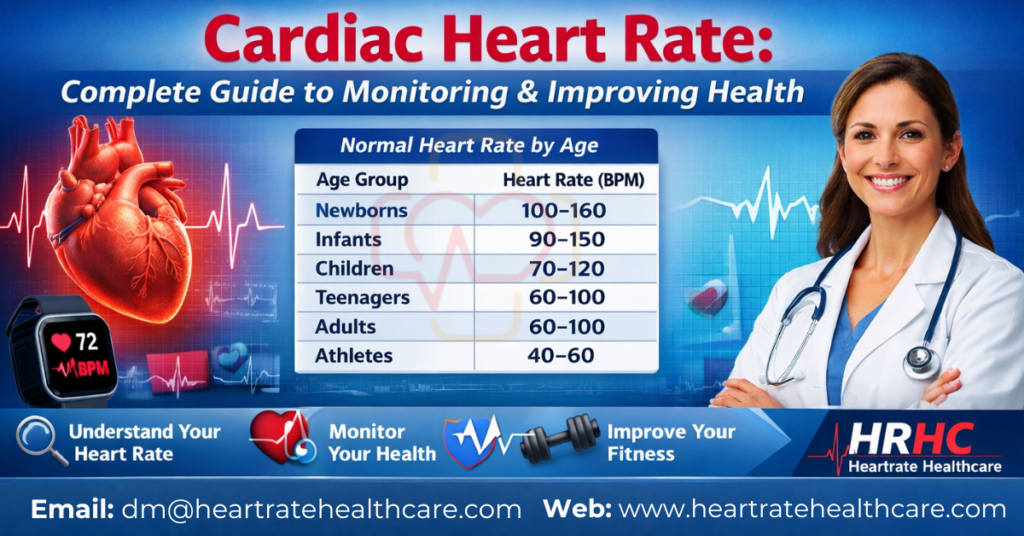
Normal Cardiac Heart Rate by Age (Table)
| Age Group | Normal Heart Rate (BPM) |
|---|---|
| Newborns | 100–160 BPM |
| Infants (1–12 months) | 90–150 BPM |
| Children (1–10 years) | 70–120 BPM |
| Teenagers (11–17 years) | 60–100 BPM |
| Adults | 60–100 BPM |
| Athletes | 40–60 BPM |
Understanding these ranges is important as it helps you compare your heart rate with general norms and recognize if your heart rate is within a healthy range.
Resting vs Active Cardiac Heart Rate
1. Resting Cardiac Heart Rate
Your resting heart rate is measured when you are not physically active, typically when you first wake up in the morning. A lower resting heart rate is generally a sign of good cardiovascular health and physical fitness.
- Normal resting Heart Rate for adults: 60–100 BPM
- Highly trained athletes: 40–60 BPM
2. Active Cardiac Heart Rate
When you engage in physical activity, your heart rate increases to provide oxygen-rich blood to your muscles. This is a natural physiological response to meet the increased demands of the body.
| Activity Type | Heart Rate Range (BPM) |
|---|---|
| Light Activity | 90–110 BPM |
| Moderate Exercise | 110–140 BPM |
| Vigorous Exercise | 140–180 BPM |
Tracking your active heart rate is essential for gauging exercise intensity and cardiovascular fitness.
Causes of High Cardiac Heart Rate (Tachycardia)
Tachycardia refers to a condition where the cardiac heart rate exceeds 100 BPM at rest. This can be caused by various factors, including:
- Stress or anxiety
- Fever or illness
- Excessive caffeine or alcohol consumption
- Medication side effects
- Heart-related conditions such as arrhythmia
A prolonged high heart rate can strain the heart, increasing the risk of cardiovascular problems.
Symptoms of High Heart Rate:
- Pounding or rapid heartbeat
- Lightheadedness or dizziness
- Shortness of breath
- Chest pain
Causes of Low Cardiac Heart Rate (Bradycardia)
A low heart rate (below 60 BPM) is known as bradycardia. While it is common in highly trained athletes, it may be concerning in others.
Causes of Low Cardiac Heart Rate:
- High physical fitness (athletes may have naturally low heart rates)
- Heart conditions such as heart block
- Thyroid disorders
- Electrolyte imbalance
- Medications such as beta-blockers
Symptoms of Low Heart Rate:
- Fatigue and weakness
- Fainting or near fainting
- Confusion or memory problems
Symptoms and Health Risks of Abnormal Cardiac Heart Rate
Irregular cardiac heart rate can be a sign of underlying health issues. Symptoms and risks include:
Symptoms:
- Palpitations (feeling of irregular or fast heartbeat)
- Shortness of breath
- Dizziness or lightheadedness
- Chest pain or discomfort
- Swelling in feet, ankles, or legs
Health Risks:
- Stroke
- Heart failure
- Sudden cardiac arrest
- Chronic cardiovascular disease
How to Measure Your Cardiac Heart Rate (Step-by-Step)
Monitoring your cardiac heart rate is simple. Here are two common methods to measure your heart rate.
1. Manual Method
- Sit down and relax for a few minutes.
- Place your fingers gently on your wrist (radial artery) or neck (carotid artery).
- Count the number of beats you feel in 15 seconds.
- Multiply that number by 4 to get the heart rate in BPM.
2. Digital Method
Wearable devices like fitness trackers, smartwatches, and medical-grade monitors make it easier to track your heart rate continuously. These devices also track your heart rate during activities, which helps monitor changes over time.
Best Ways to Improve Your Cardiac Heart Rate
Maintaining a healthy cardiac heart rate can be done by following simple lifestyle changes.
1. Regular Physical Exercise
Exercise improves heart efficiency and lowers resting heart rate. Cardio exercises like walking, jogging, swimming, and cycling help maintain a healthy cardiac heart rate.
2. Maintain a Healthy Diet
A diet rich in vegetables, fruits, whole grains, lean proteins, and healthy fats supports heart health and helps regulate your Heart Rate.
3. Stay Hydrated
Dehydration can increase cardiac heart rate, so drinking plenty of water throughout the day is essential.
4. Manage Stress
Stress and anxiety can elevate cardiac heart rate. Practicing yoga, meditation, or breathing exercises can help lower your heart rate naturally.
5. Avoid Smoking and Excessive Alcohol
Both smoking and alcohol intake increase heart rate and strain the cardiovascular system.
6. Get Enough Sleep
Sleep is vital for cardiovascular recovery. A good night’s sleep helps regulate resting heart rate.
When to See a Doctor for Cardiac Heart Rate Issues
If you notice any of the following, seek medical attention:
- Your resting heart rate remains consistently over 100 BPM or below 60 BPM (unless you’re an athlete)
- Irregular heartbeats (palpitations)
- Unexplained dizziness, fainting, or shortness of breath
- Chest pain or tightness
FAQs About Cardiac Heart Rate
1. What is a normal cardiac heart rate?
A normal cardiac heart rate for most adults is between 60–100 BPM when at rest.
2. How do I know if my heart rate is too high?
If your heart rate exceeds 100 BPM at rest for extended periods, you should consult a healthcare professional.
3. What is a low heart rate for adults?
A resting heart rate below 60 BPM may be normal for athletes but can be concerning in others.
4. How does exercise affect cardiac heart rate?
Exercise increases your heart rate temporarily but helps improve long-term heart health and reduces resting heart rate.
5. Can stress affect my heart rate?
Yes, stress and anxiety can temporarily increase your cardiac heart rate.
6. Is it normal for my heart rate to fluctuate?
Yes, your cardiac heart rate naturally fluctuates based on activity, emotions, and other factors.
7. What are the risks of a consistently high heart rate?
A consistently high heart rate can lead to heart disease, stroke, and other cardiovascular issues.
8. Can drinking water help lower heart rate?
Yes, dehydration can elevate your cardiac heart rate, so staying hydrated is important.
9. Can medications affect my heart rate?
Yes, medications like beta-blockers or stimulants can alter your heart rate.
10. When should I consult a doctor about my heart rate?
If you notice irregularities or experience symptoms like dizziness, chest pain, or shortness of breath, consult a doctor.
Conclusion
Maintaining a stable cardiac heart rate is key to good heart health. By monitoring your heart rate and adopting a healthy lifestyle, you can reduce the risks of cardiovascular disease and improve overall well-being.
At Heartrate Healthcare (HRHC), we are dedicated to providing resources and guidance to help you maintain a healthy cardiac heart rate.