
Hospital Management: Complete Guide for Modern Healthcare
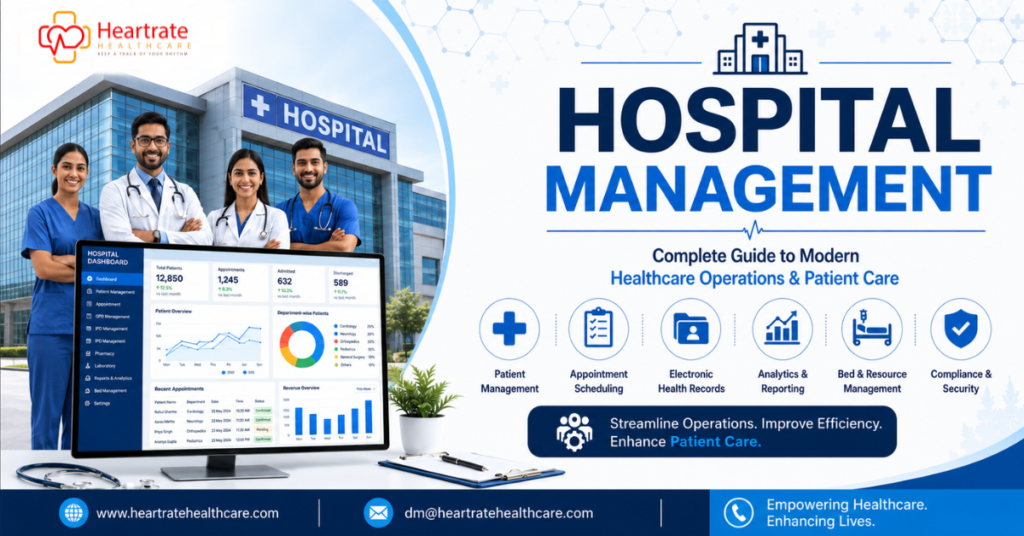
The healthcare industry is evolving rapidly, making Hospital Management one of the most important aspects of delivering quality medical services. Effective Hospital Management ensures smooth operations, improved patient care, better resource utilization, and enhanced healthcare outcomes. Hospitals today must manage complex workflows, medical staff, patient records, billing systems, regulatory compliance, and technological advancements.
Organizations such as Heartrate Healthcare (HRHC) understand the importance of streamlined healthcare operations and modern management practices. With increasing patient expectations and healthcare regulations, hospitals need advanced management strategies to remain competitive and efficient.
What is Hospital Management?
Hospital Management refers to the administration and coordination of healthcare services, medical staff, resources, infrastructure, and financial operations within a healthcare facility. It involves planning, organizing, directing, and controlling all hospital activities to ensure quality patient care and operational efficiency.
The primary objective of hospital administration is to provide excellent healthcare services while maintaining financial sustainability and regulatory compliance.
Key components include:
- Healthcare administration
- Patient care management
- Medical staff coordination
- Hospital operations
- Financial management
- Healthcare compliance
- Quality assurance
- Health information management
- Resource allocation
- Healthcare technology integration
Importance of Hospital Management
Modern hospitals face numerous challenges, including increasing patient volumes, rising operational costs, and evolving healthcare regulations. Effective Hospital Management helps healthcare organizations address these challenges successfully.
Improved Patient Care
Efficient administration ensures patients receive timely diagnosis, treatment, and follow-up care. Better coordination among departments enhances patient experiences and outcomes.
Operational Efficiency
Well-structured processes reduce delays, minimize errors, and improve productivity across departments.
Financial Stability
Healthcare facilities can optimize budgets, reduce unnecessary expenses, and improve revenue cycle management.
Regulatory Compliance
Hospitals must comply with healthcare regulations, accreditation standards, and patient privacy laws.
Enhanced Resource Utilization
Proper planning ensures effective use of medical equipment, healthcare professionals, and hospital infrastructure.
Core Functions of Hospital Management
Strategic Planning
Healthcare leaders develop long-term goals and strategies to improve healthcare delivery and organizational growth.
Strategic planning includes:
- Healthcare expansion plans
- Technology adoption
- Patient service improvement
- Workforce development
- Risk management
Human Resource Management
Healthcare professionals are the backbone of any hospital. Effective workforce management includes:
- Recruitment
- Training and development
- Staff scheduling
- Performance evaluation
- Employee engagement
Financial Management
Healthcare organizations must manage finances efficiently to ensure sustainability.
Financial responsibilities include:
- Budget preparation
- Revenue management
- Billing and coding
- Insurance coordination
- Cost control
Patient Information Management
Managing patient records accurately is essential for quality care and compliance.
Modern hospitals use:
- Electronic Health Records (EHR)
- Healthcare Information Systems
- Medical databases
- Clinical documentation platforms
Quality Management
Hospitals continuously monitor service quality to improve patient outcomes and safety.
Quality initiatives focus on:
- Patient satisfaction
- Clinical effectiveness
- Safety protocols
- Infection control
- Performance measurement
Key Departments in Hospital Management
Administration Department
The administration team oversees overall hospital operations and strategic decision-making.
Clinical Services
Clinical departments provide diagnosis, treatment, and medical care.
Examples include:
- Cardiology
- Neurology
- Orthopedics
- Pediatrics
- Oncology
Nursing Services
Nursing teams play a critical role in patient care, monitoring, and treatment support.
Finance Department
Responsible for budgeting, accounting, insurance claims, and revenue management.
Human Resources
Handles workforce planning, recruitment, training, and employee welfare.
Information Technology
Supports healthcare software, cybersecurity, digital records, and system integration.
Role of Technology in Hospital Management
Technology has transformed modern healthcare administration.
Electronic Health Records (EHR)
Digital records improve accessibility, accuracy, and coordination of patient information.
Benefits include:
- Reduced paperwork
- Faster access to records
- Better clinical decisions
- Improved patient safety
Hospital Information Systems (HIS)
A Hospital Information System integrates multiple hospital functions into a centralized platform.
Features include:
- Appointment scheduling
- Billing management
- Laboratory management
- Pharmacy management
- Patient registration
Telemedicine
Telehealth services enable remote consultations and improve healthcare accessibility.
Artificial Intelligence
AI assists healthcare providers in:
- Predictive analytics
- Medical imaging
- Patient monitoring
- Clinical decision support
Data Analytics
Healthcare analytics helps administrators identify trends and improve operational performance.
Challenges in Hospital Management
Healthcare facilities face several operational and administrative challenges.
Rising Healthcare Costs
Increasing costs of equipment, medications, and workforce management impact hospital profitability.
Workforce Shortages
Many healthcare organizations struggle to recruit and retain skilled professionals.
Regulatory Compliance
Healthcare regulations frequently change, requiring continuous monitoring and updates.
Data Security Risks
Protecting sensitive patient information is a top priority.
Patient Expectations
Patients demand faster services, personalized care, and digital healthcare solutions.
Best Practices for Effective Hospital Management
Focus on Patient-Centered Care
Patients should remain the central focus of all hospital operations.
Invest in Healthcare Technology
Modern digital tools improve efficiency and enhance service delivery.
Continuous Staff Training
Regular training ensures healthcare professionals remain updated on industry standards.
Strengthen Communication
Effective communication between departments improves coordination and reduces errors.
Monitor Performance Metrics
Healthcare organizations should track key performance indicators regularly.
Important metrics include:
- Patient satisfaction scores
- Bed occupancy rates
- Readmission rates
- Average length of stay
- Staff productivity
Hospital Management and Healthcare Marketing
Healthcare organizations increasingly use marketing strategies to attract and retain patients.
Benefits include:
- Increased patient engagement
- Improved brand visibility
- Better community outreach
- Enhanced reputation management
Companies like Heartrate Healthcare (HRHC) support healthcare organizations through healthcare solutions, digital transformation, and operational improvement strategies that help hospitals achieve long-term success.
Leadership in Hospital Management
Strong leadership is essential for successful healthcare administration.
Healthcare leaders must possess:
- Decision-making skills
- Strategic thinking
- Communication abilities
- Financial knowledge
- Problem-solving expertise
Effective leaders inspire healthcare teams and foster a culture of continuous improvement.
Future Trends in Hospital Management
The future of healthcare administration will be driven by innovation and technology.
Digital Transformation
Hospitals are increasingly adopting cloud-based systems and digital healthcare platforms.
Artificial Intelligence Integration
AI will continue improving diagnostics, operational efficiency, and patient care.
Value-Based Healthcare
Healthcare providers are shifting from volume-based services to outcome-focused care models.
Remote Patient Monitoring
Wearable devices and connected health technologies will support continuous patient monitoring.
Healthcare Automation
Automation will streamline administrative processes and reduce manual workloads.
Benefits of Professional Hospital Management Services
Healthcare organizations often partner with specialized healthcare service providers for operational support.
Advantages include:
- Improved efficiency
- Better patient experiences
- Enhanced compliance
- Cost optimization
- Technology implementation
- Revenue cycle improvement
Professional healthcare management solutions help hospitals remain competitive while focusing on patient care excellence.
Why Choose Heartrate Healthcare (HRHC)?
Heartrate Healthcare (HRHC) is committed to supporting healthcare organizations with innovative healthcare solutions, operational excellence, and strategic healthcare services. By focusing on quality improvement, digital healthcare transformation, and patient-centered care, HRHC helps healthcare facilities strengthen their operational capabilities and achieve sustainable growth.
Healthcare providers can benefit from customized solutions designed to improve efficiency, enhance patient satisfaction, and support long-term organizational success.
Conclusion
Hospital Management BPO plays a vital role in ensuring healthcare organizations deliver safe, efficient, and high-quality patient care. From strategic planning and workforce management to healthcare technology and financial administration, every aspect of hospital operations requires careful coordination and continuous improvement.
As healthcare systems continue to evolve, organizations that invest in effective management practices, digital transformation, and patient-centered strategies will be better positioned for success. With support from experienced healthcare partners like Heartrate Healthcare (HRHC), hospitals can optimize operations, improve patient outcomes, and build a stronger future for healthcare delivery.